


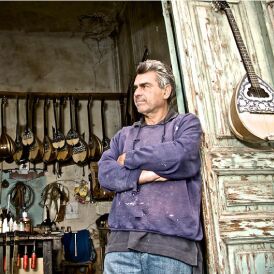
THE FATHER
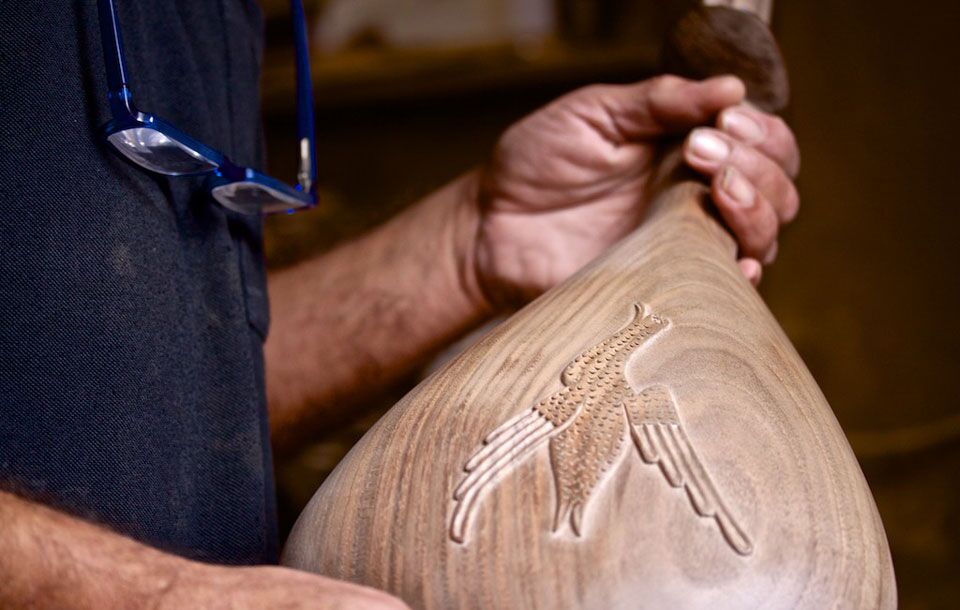
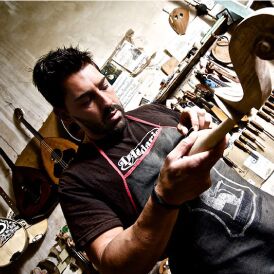
THE SON NIKOS
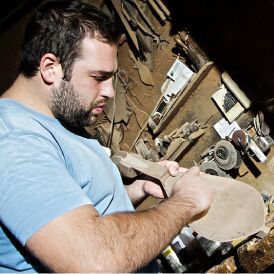
THE SON GIORGIS
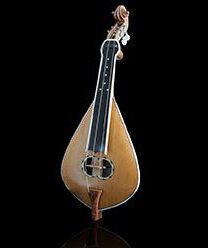
This is a Lyra used by professional musicians. According to some old-time lyra musicians from Rethymno Gianni Papadaki – Karekla (son of Karekla a distinguished player) and Gianni Markogianni one of the greatest Lute players, the shape of the lyra has since that time changed and responsible for changing the shape was Giannis Papadakis – Kareklas who made Lyras and cousin of the above mentioned well-known lyra player. Giannis Papadakis during the war fought in Albania but unfortunately was never to return.
In fact, I have myself repaired one of Giannis Papadakis Lyras which had that particular shape. This lyra is tuned La – Re – Sol but can also be altered to a higher or lower note according to the musical abilities of the lyra singer.
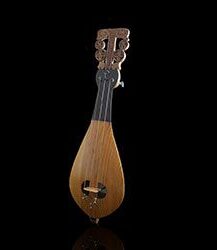
In years before, the style of the Cretan Lyra was pear-shaped Lyra. The strings are tuned to La – Re – Sol and when played the sound of this type of Lyra reminds takes you back in time with the sounds of Sousta and Pendozali by Karaviti and other such musicians.
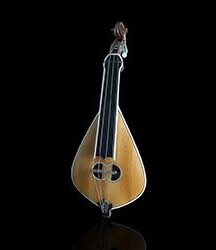
This is a professional lyra tuned Mi – La – Re – Sol giving the player an added possibility to play certain types of traditional Greek island so that the whole nature of playing has a different note to it.
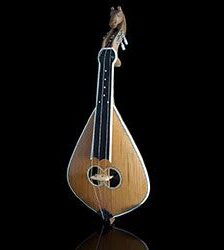
This type of lyra is larger than the normal lyra and is also tuned La – Re – Sol and has a much deeper sound.
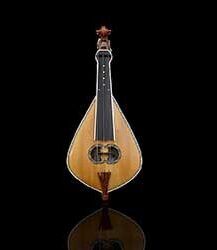
This is a professional lyra made from rosewood from the wild forests of Africa and for this reason it is very hard and heavy. It is a very difficult wood to work with but the finished product is quite amazing.
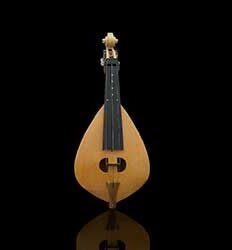
It is much the same as the professional lyra. The difference between these two lyras is the intricate design that the professional lyra has. However, the sound does not differ from a professional lyra.

It is much the same as the professional lyra. The difference between these two lyras is the intricate design that the professional lyra has. However, the sound does not differ from a professional lyra.